
Table of contents

1. Introduction from Chief Information Officer Donna Kidwell
Stepping into the role Chief Information Officer this past year, I have been inspired by the connection and collaboration across our campuses. Welcoming Zoran Piljevic as deputy CIO further strengthened our ability to coordinate technology efforts across divisions, exemplified by his leadership in co‑sponsoring the IT@UofT Tech Alignment Task Force — a university-wide initiative to advance capability across a range of shared service areas.
Our institutional partnerships have been equally important. Our ongoing collaboration with Professor Susan McCahan, associate vice‑president & vice‑provost, Digital Strategies, has deepened the alignment between academic priorities and institutional technology strategy, particularly as we advance digital transformation, student information systems renewal and AI‑related adoption. As well, the continued maturation of the IT@UofT governance ecosystem — including the IT@UofT Board and IT@UofT Business Board — has sharpened our focus and strengthened transparency in how we invest in the future.
Across all of this work runs a common thread: digital trust. Security, transparency and user agency are the conditions that make innovation possible. By strengthening foundations today, we are ensuring the university is ready for change tomorrow. Together, we are championing technology that empowers teaching, learning, research and administration, while strengthening the university’s ability to adapt and evolve.
Dr. Donna K. Kidwell
Chief Information Officer
University of Toronto

2. Priority initiatives
Over the past year, ITS has begun to advance priority initiatives that will strengthen
IT@UofT Tech Alignment Task Force
Artificial intelligence (AI)
As interest in AI surges across the university, ITS is working with the university’s Digital Strategies office to establish our AI Kitchen — providing a safe, supported path for the
In its pre-launch phase, the AI Kitchen team, in collaboration with University of Toronto Libraries, piloted assistant platforms including ChatGPT Edu, M365 Copilot and Cogniti, while exploring technical foundations and practices required for safe and accountable AI adoption. In parallel, the team engaged communities across research, teaching and administration to identify emerging needs and opportunities. Our aim is to enable a broader adoption of responsible, human-centred AI solutions and leverage

ITS partnered with Scholars Portal of the Ontario Council of University Libraries to develop and apply AI-enabled frameworks and processes to improve efficiency in metadata extraction, evaluation and processing for 50,000 government documents to enhance FAIR (findability, accessibility, interoperability and reproducibility) principles, demonstrating the practical application of AI in higher education, research and operational contexts.
Institutional Academic and Student Applications
Academic and administrative systems shape how students, faculty and staff experience the university — from registration and advising to reporting and decision making. ITS began foundational work to reimagine Institutional Academic and Student Applications (IASA), informed by research, analysis and participatory design with students, staff and faculty across the institution.
In its first year, the program is identifying challenges and opportunities across academic and administrative journeys to define a strategic technology vision and pathway for this transformation. The comprehensive design effort will strengthen the university’s student data management, reduce friction and workflow delays with critical administrative processes, leverage interoperability across platforms and ensure compliance with our security and privacy goals.

3. Securing the path forward
As the university advances digital transformation, research collaboration and responsible AI adoption, strong information security is essential to ensuring these efforts can scale safely and sustainably. This year, ITS’ Information Security team strengthened the university’s ability to respond to emerging risks, meet evolving regulatory requirements and support secure innovation. We benefit from shared threat intelligence available through the Canadian Shared Security Operations Centre, made stronger through our federated security operations centre, supported by CANARIE.
Strengthening institutional protection

We extended firewall management-as-a-service to 100 per cent of units identified for this phase, improving visibility, incident response and cost efficiency.
We expanded cybersecurity-as-a-service, achieving a 76 per cent improvement in remediation timelines for participating faculties, with threat response times reduced from 48 hours to 2 hours.

We enhanced threat detection capabilities, reducing compromised account reset times from one day to 10 minutes and cutting manual phishing email triage effort by 86 per cent.
Risk response improvements:
 100%
100%firewall coverage
 86%
86%reduction in phishing triage
 115
115privacy assessments
Director, Technology Services, Faculty of Law

Preparing for regulatory and research demands
- Advanced readiness for Ontario’s Cybersecurity Act (Bill 194), delivering 15+ information sessions attended by over 400 community members and completing over 115 privacy assessments in six months.
- Expanded the Loaner Device Program, with the Division of the Vice-President, Research & Innovation, equipping senior leaders with secure, locked-down devices for secure international collaboration across 19 global trips.
Building a security-aware culture
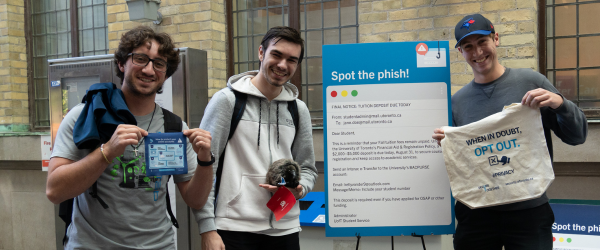
Engaged 1,100+ students through security awareness campaigns during orientation week, Cyber Security Awareness Month and Data Privacy Day.
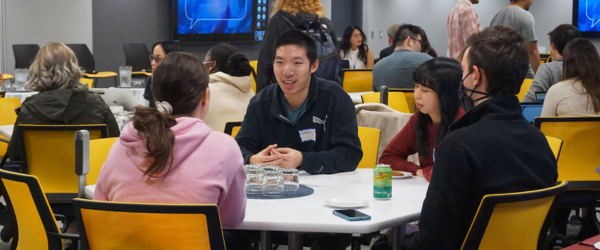
Delivered targeted training on privacy and digital security practices, with

Launched Privacy Quest, a new interactive tool to support community-wide privacy education.

4. Transforming systems
These initiatives strengthen the university’s foundational technology environment, making it more resilient, better connected and prepared to support the evolving needs of our academic and administrative communities.
Strengthening business applications
Through ongoing digital transformation efforts, we continue to update and modernize the business applications that power core university operations, improving reliability and creating a better experience for the
Improving the way we work

Launched UTime, in partnership with the Division of People Strategy, Equity & Culture (PSEC), delivering a mobile-friendly staff time and attendance system with improved reporting and payroll integration.

Introduced Concur, in collaboration with the Financial Services Division, streamlining travel and expense submissions and accelerating reimbursement processing.

Launched UTSend, providing a secure alternative to email for confidential and large file transfers.
Protecting institutional trust
- Upgraded
U of T’s human resources SAP system, ensuring payroll continuity, licensing compliance and improved system performance. - Introduced a new Document Management System, replacing the legacy service with a modern content services platform.
Powering informed decision-making
- Delivered Microcredentials data mart and OSAP reporting, enabling efficient government compliance and improved transparency.
- Advanced SAP Employee Central, completing second phase of design and process alignment to modernize onboarding functions.
- Launched the TA Administrative Management System, streamlining hiring and management for 6,300+ teaching assistants annually.

Executive director, HR Transformation & Analytics at PSEC
Advancing student systems modernization
ITS advanced foundational work to renew

Launched the SIS modernization initiative in partnership with the Office of Digital Strategies and the IASA governance community.

Assessed the Repository of Student Information (ROSI) platform and its integrations to ensure diagnostic and architectural alignment.

Supported launch of Curriculum Management platform with the School of Graduate studies, onboarding 6,800 graduate courses and 1,050 graduate programs.
Launched Student Advising Service student portal, onboarding students from the Faculty of Kinesiology and Physical Education and expecting more divisional participation in 2026.
 6,300+
TAs supported
 6,800 courses modernized
 1,050
1,050programs onboarded
 3 major enterprise systems launched
Digital learning
ITS strengthened digital learning by equipping instructors and students with tools and insights to adapt as teaching and learning continue to evolve.

Integrated Respondus LockDown Browser into Quercus through the Academic Toolbox, enabling secure online assessments.

Advanced the Learning Analytics Initiative in collaboration with ARC, OVPIUE and the Centre for Teaching Support & Innovation (CTSI), piloting instructor dashboards.

Piloted Academic, Research & Collaborative technologies’ (ARC) AI Virtual Tutor Initiative, with CTSI, creating secure Quercus-integrated course-specific virtual tutors with AI-rich features tailored for teaching and learning.

Supported early AI adoption, with
Supporting flexible, technology-enabled teaching
To support evolving teaching approaches,
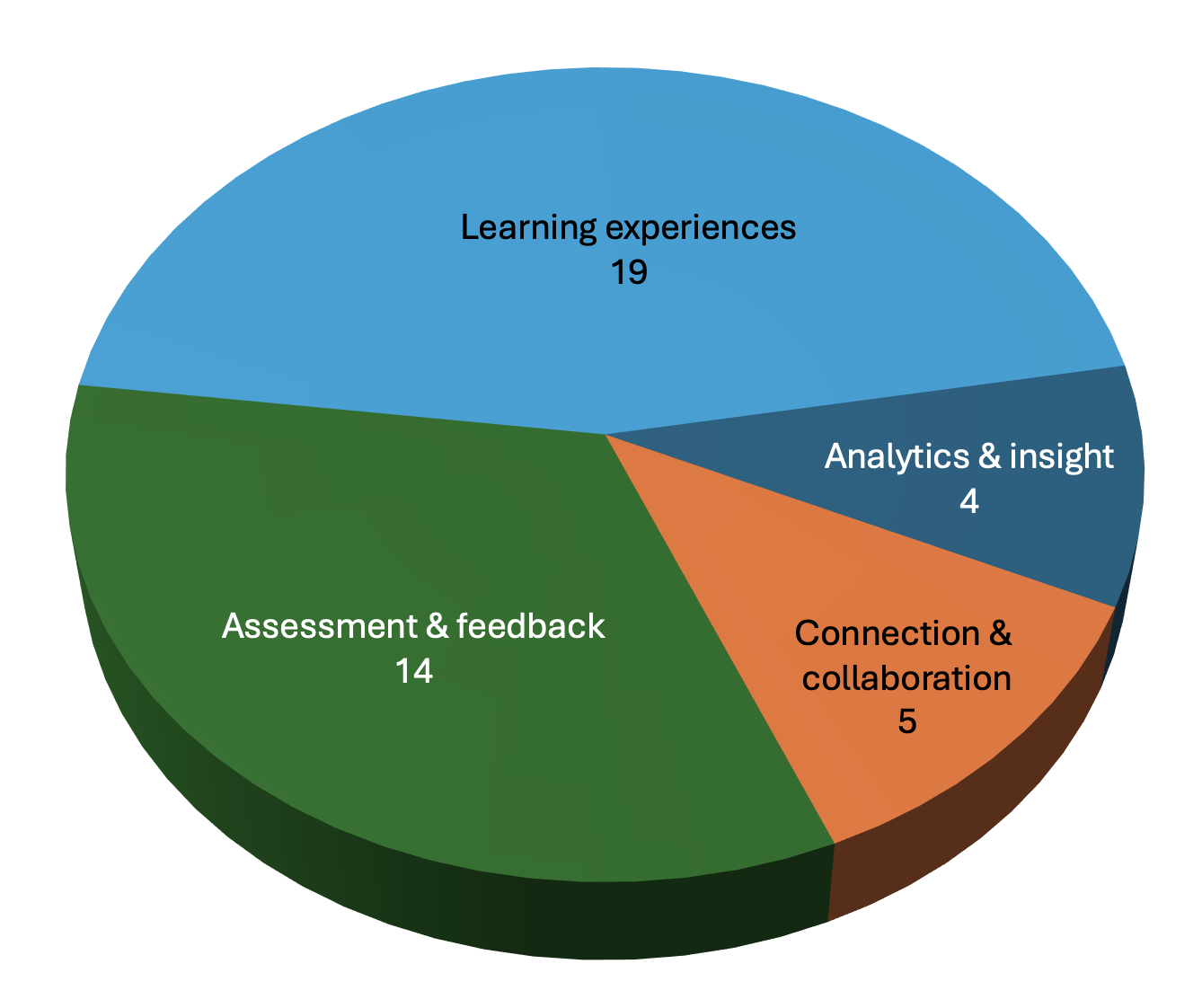
Academic Toolbox applications available to instructors
- 4 tools for course analytics and insight
- 5 tools to support connection and collaboration
- 14 tools for assessment and feedback
- 19 tools to build and structure learning experiences
Assistant professor, Occupational Science & Occupational Therapy,

Research
ITS supported research by reducing administrative complexity and strengthening secure, scalable infrastructure across the university.
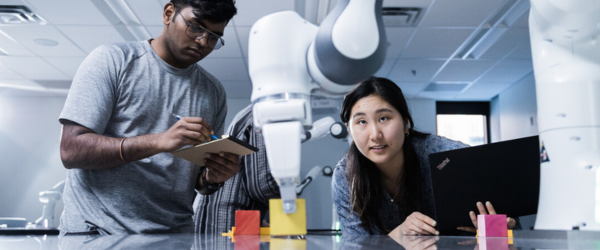
Streamlined research administration through My Research Funds, introducing tools for agreement templates, awards intake, autopayments and ethics workflows to reduce manual effort.
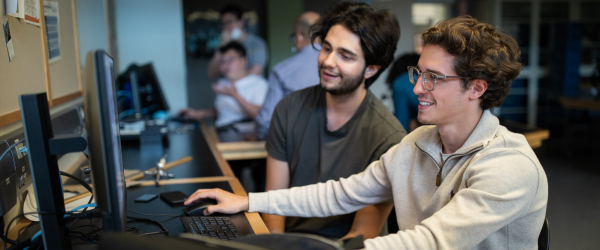
Standardized Azure cloud services for research environments, by creating our own scripts, templates and standardized architectures to support compliant, scalable and secure research workloads.
Advanced the Research Information Security Program, connecting researchers with security services and supports to reduce administrative burden and improve competitiveness.
Research metrics:
 $1.54B
total research funds administered annually
 1,868
1,868human ethics protocols annually
 531
531animal use protocols annually
 Monthly average of
5,000
users

Director, Office of the Vice-Dean Research and Health Science Education, Temerty Faculty of Medicine,

5. Learning together
ITS invests in the people behind our systems by expanding opportunities for staff to learn from one another, build practical skills and adapt to new technologies and evolving ways of working.
 54
54tri-campus events
 3,600+
staff engaged
 Technical, leadership and management skills developed

Hosted monthly Thursday@3 sessions, where community members shared practical AI use cases and lessons from early experimentation.
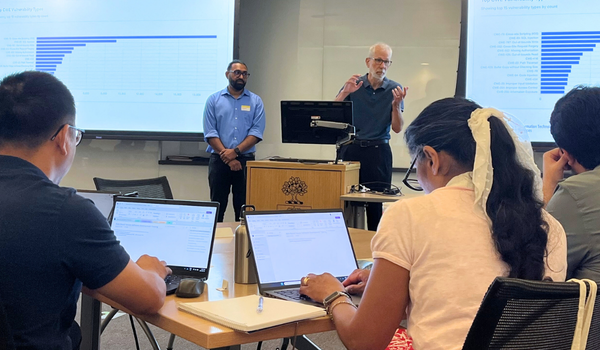
Introduced secure software development training, equipping ITS developers and project managers with tools to reduce vulnerabilities across enterprise systems.
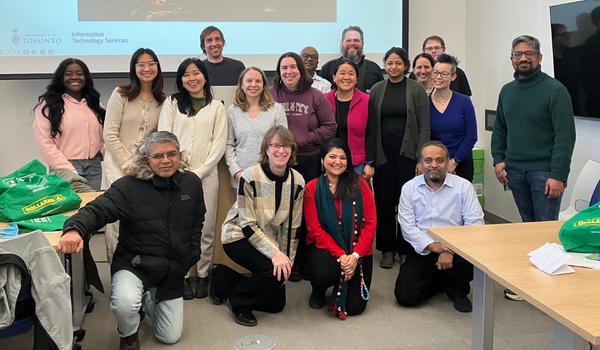
Delivered accessibility workshops and experiential sessions, including the Inclusivity Escape Room, to help teams embed inclusive design into daily work.

Launched the Global Design System, providing design guidelines, standards and reusable components to support consistent, accessible user experiences.

6. Service excellence
Delivering reliable services at scale requires clear processes and shared infrastructure that can adapt to evolving institutional needs. This year, ITS strengthened service delivery through better cost visibility, expanded network resilience and more consistent operational practices.
Making IT services more reliable
This year, ITS improved service delivery by increasing cost transparency, expanding network resilience and standardizing operational processes.
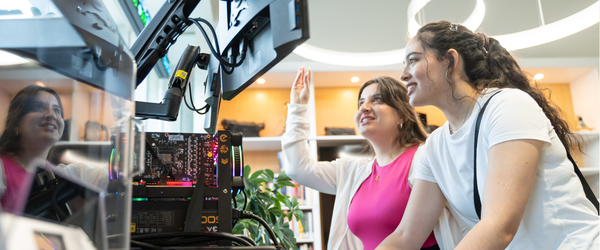
Modernized the UniversITy Service Catalogue, simplifying discovery of IT programs and services.
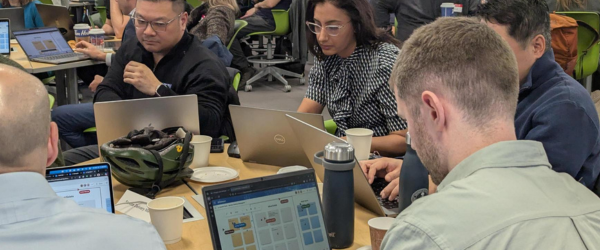
Expanded Network-as-a-Service to 41 departments, with 11 more preparing for adoption to improve security and resilience.
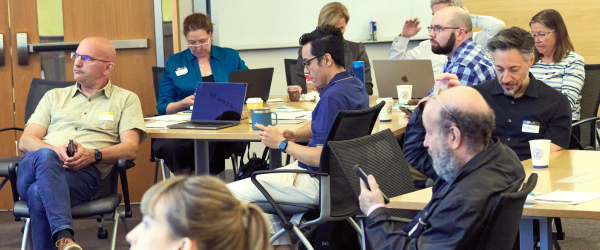
Launched a uniform ITS change management process, including weekly Change Advisory Board approvals to increase transparency and visibility into service impacts.
ITS supports digital enterprise infrastructure at scale
 3,145
3,145virtual machines hosted in ITS private cloud
 58 TB
58 TBof memory, equivalent to 6,750 smartphones
 6 PB
6 PBof storage, enough for 1.2 million HD movies
In the past 12 months the team has commissioned
 877
877new virtual machines
 Completed
7,481
change requests
 Created 885
point-in-time snapshot captures

7. Preparing for what’s next
In 2026, we’ll continue strengthening the systems people rely on every day — making them safer, simpler and more dependable. Our goal is to support responsible innovation and make the digital experience better for everyone at
Protecting digital trust
- Advancing identity governance through the Identity Governance and Administration project, establishing SailPoint Identity Warehouse as the authoritative identity system and establishing secure onboarding for new students and staff.
- Expanding email protections through DMARC — a tool that checks whether an email claiming to come from
U of T is legitimate — to strengthen trust in university communications and reduce domain spoofing and phishing attempts.
200,000+ potentially malicious messages blocked since email protections implemented in August 2025.
Advancing responsible AI adoption
- Providing secure environments for AI projects and collaborating with
U of T Libraries to expand the AI Kitchen with vetted applications, development environments, and frameworks for procurement and data handling. - Supporting the launch of a centralized AI learning hub with the Digital Strategies portfolio, including AI literacy programming, communities of practice, and AI special interest groups.
- Scaling course‑integrated AI virtual tutors in partnership with CTSI to enable broader adoption and ensure equitable, secure, and innovative use in learning contexts.
Improving the student learning experiences
- Extending learning analytics dashboards, enhancing instructors’ ability to visualize course-level student activity within Quercus.
- Delivering a new Accommodated Testing Service platform, with Learning Space Management, to support accessible exam bookings.
- Implementing a microcredential badging platform, enabling learners to share verified skills with employers.
Transforming student information systems
- Advancing SIS modernization, in collaboration with Digital Strategies, through participatory design and vendor assessment.
- Introducing Experience Analysis & Design methodology to engage the community and align SIS processes with observable user needs.
- Expanding the Student Advising Service student portal, enabling students to schedule advising appointments across divisions.

Building our community capability
- Refreshing the TechKnowFile conference, returning to its roots as a community-led, knowledge-sharing event.
- Supporting staff professional development, through improved communication of learning opportunities and skill-building programs.
Improving accessibility
- Implementing a new accessibility services platform, with Student Life and the OVPIUE, to support streamlining accommodation processes including data integration with SIS and course information systems to improve usability and data access, while reducing manual administrative effort.

Sustaining enterprise platforms
- Transitioning SAP development tools, aligning with SAP Business application studio and Integration Suite.
- Implementing Electronic Funds Transfer payments, with Financial Services, streamlining vendor payments and reducing manual payment processes to lower administrative cost and processing time.

8. Stewardship of our resources
In this time of constraint, ITS continues to exercise prudent fiscal management to ensure the responsible and efficient use of resources. We are working to:
Build capacity while identifying opportunities for cost savings.

Improve cost transparency through development of a consolidated vendor-spend dashboard, supporting stronger negotiations and economies of scale.
Together, with our partners from across IT@UofT, these efforts strengthen the university’s ability to navigate new horizons with confidence, security and resilience.
